
Craft ideas & projects
How to Start a Small Sticker Business from Home
Plan a home sticker business with one clear offer, sample checks, realistic production capacity, cost records, and a repeatable order-to-shipping workflow.
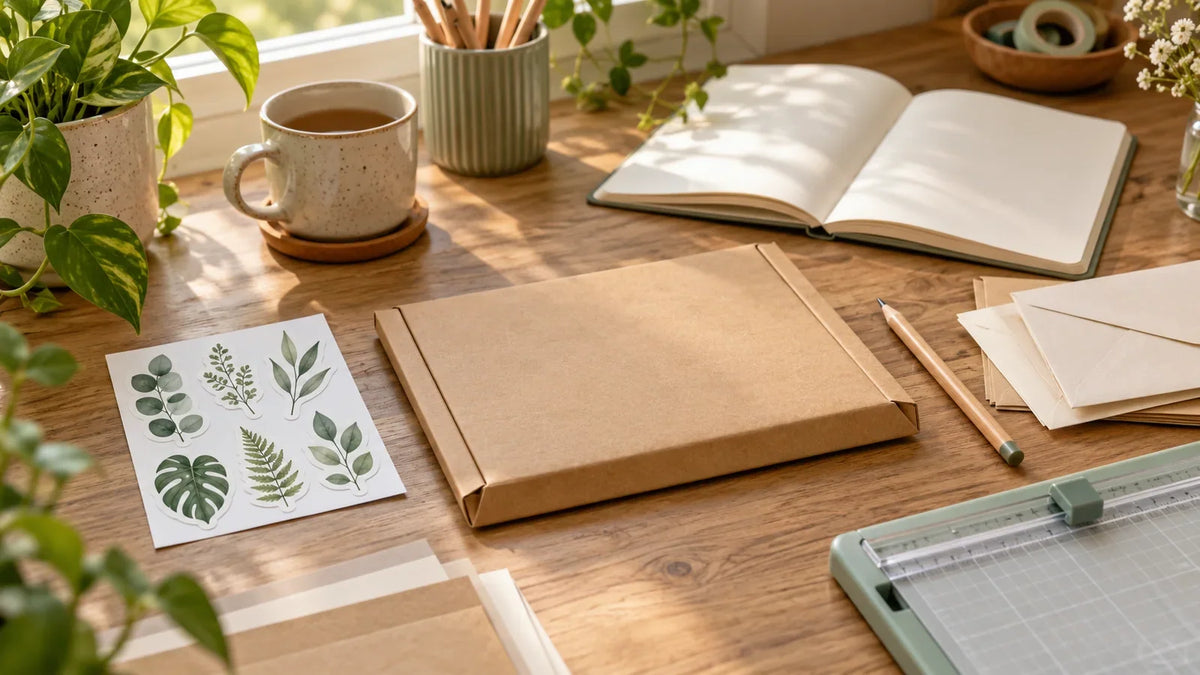
To start a small sticker business from home, choose one specific product, make a sample you can reproduce, record its costs and production time, and work out how an order will reach the customer. Check the business rules that apply where you operate before taking orders. A small, clearly described offer is a more manageable starting point than a large catalog with untested materials.
This guide focuses on planning and fulfillment. If you still need to make your first sample, start with our home inkjet sticker-making walkthrough, then return with a finished sheet and a few notes about what worked.
Choose one customer use, not just a theme
“Cute stickers” describes an appearance, but it leaves important decisions open. Stickers for paper planners, small-business packaging, and outdoor equipment have different uses and expectations. Begin with one use you can support rather than promising that the same sticker works everywhere.
For example, an initial offer could be a small set of original botanical stickers for dry, indoor paper journals. That description gives you a starting point for the artwork, finish, packaging, and care information. It does not establish demand or prove that the materials are suitable; those still need checking.
Ask potential customers what they would use the set for, which sizes are useful, and what information they need before buying. Record their answers separately from compliments. Someone liking an illustration is not the same as someone choosing a product at a stated price. The U.S. Small Business Administration’s market-research guidance recommends investigating demand, alternatives, and customer needs.
Write a product specification before buying more supplies
Create a short specification for the first offer. It should be clear enough that you could return to it next week and make the same product without guessing.
- Contents: the number of individual stickers or sheets in one order.
- Dimensions: the finished size of each design, or the size range if the pieces differ.
- Material and finish: the exact material you will use, not simply “premium paper.”
- Intended use: the surfaces and conditions you have a basis to recommend.
- Options: a fixed set, a choice of designs, or a limited personalization field.
- Packaging: how the customer receives the set and any application or care information included.
Start with fewer options if each variation adds a different proof, cut file, or packing step. A personalized name sticker, for example, needs an agreed spelling and a way to resolve text that does not fit. Decide those rules before advertising unlimited customization.
Use our guide to choosing sticker paper for an inkjet printer when narrowing the material. If you are comparing material categories, our printable vinyl versus sticker paper comparison explains why the label alone is not enough to choose a finished product’s use.
Make a sample and define what you will reject
Keep a reference sample of the actual product you plan to sell. Write down its material, print settings, finished dimensions, and packaging. Photograph that sample for the listing rather than relying only on a digital design preview.
Make the acceptance checklist specific. Does the printed artwork have missing areas or visible streaks? Is the cut inside the illustration? Can the backing be separated without damaging the sticker? Is the quantity correct? Are personalized details spelled as approved? A sample that looks attractive in a photograph can still fail an order check.
Do not describe a sticker as waterproof, dishwasher-safe, removable, or suitable for a particular surface merely because the material sounds appropriate. Match claims to the exact finished construction and evidence available. If you have only established suitability for dry paper projects, keep the offer within that limit.
Record rejected sheets as part of production, not as an expense that disappears because you cannot sell them. If a problem repeats, fix the process before increasing the number of orders.
Find your real production capacity
Time a small practice run from file preparation through packing. Separate hands-on work from waiting time, and include the steps that are easy to overlook: checking personalization, loading materials, removing waste, counting pieces, and preparing the parcel.
A simple log needs only four entries: quantity started, saleable quantity finished, hands-on minutes, and elapsed time. Add the reason for any rejects. Repeat the run to see whether the workflow is predictable; one unusually smooth run is a weak basis for a shipping promise.
As a hypothetical planning example, suppose five packs take 50 minutes of hands-on work. That averages 10 minutes per pack for that run, not a guarantee that every future order takes 10 minutes. Customer messages, a material change, or an interrupted cutting job can add time. Leave capacity for those tasks rather than filling every available hour with production.
Separate setup spending from the cost of each order
List what you already have before buying equipment. Then distinguish purchases needed to get started from costs that recur as you make and sell products. The SBA’s startup-cost guidance recommends separating one-time and ongoing expenses.
- Setup: equipment you actually need, sample materials, and applicable setup or registration expenses.
- Production: material, ink, failed output, finishing supplies, and your labor.
- Per order: packaging, shipping, and applicable selling or payment fees.
- Ongoing: software, website costs, and other relevant overhead.
Use supplier quotes and your own production log rather than another maker’s budget. Keep detailed price calculations separate from this startup plan, but do not launch with a price that accounts only for the sticker sheet. Record what remains after the order’s costs and consider how it contributes toward ongoing expenses and your work.
Rehearse an order from request to dispatch
Choose one selling channel for the first offer and read its current requirements and fees. Then walk through a practice order without a customer deadline. The goal is to find missing information before a paid order exposes it.

- Confirm the order: product, quantity, selected options, and any approved personalization.
- Prepare the correct file: use a clear product code and version so an old design does not enter production.
- Produce and inspect: use the specification and acceptance checklist.
- Count and pack: check the pieces against the order and protect them appropriately for the delivery method.
- Check the destination: confirm the shipping details and applicable carrier requirements.
- Record dispatch: retain the order reference and available shipping evidence; communicate the status accurately.
Measure and weigh the packed order before estimating postage. Keep your production lead time separate from the carrier’s delivery estimate. Also decide how customers can contact you about an incorrect or damaged order, with policies that meet applicable consumer requirements.
Check rights and local requirements before taking orders
For purchased graphics or fonts, keep the license and purchase record and check that the intended sticker product is permitted. A downloadable file being accessible does not by itself establish permission to sell products using it. The U.S. Copyright Office’s permissions FAQ explains how to seek permission and cautions against assuming a fixed amount of alteration makes another person’s work yours.
Business requirements depend on your location and circumstances. Check registration, tax obligations, home-business or zoning rules, and any relevant product or selling requirements with the appropriate authorities. The SBA’s launch guide is a U.S. starting point, not a registration or tax guide for every country. Ask a qualified local adviser when a requirement is unclear.
Launch a small offer you can repeat
Before opening orders, make sure you can show the actual product, describe its limits, reproduce an acceptable sample, explain the price, and pack an order within a realistic lead time. If any of those is still uncertain, resolve it before adding more designs.
After a small initial run, review what buyers asked, what took longer than expected, and which defects or packing problems occurred. Improve the specification and workflow first. Expanding a reliable offer is a more useful next step than adding options to a process you still have to guess through.


Comments & Reviews
Be the first to share your thoughts.